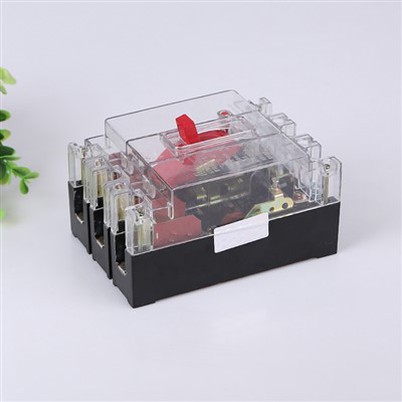

What is the difference between a Miniature Case Circuit Breaker and a DCB?
Leave a message

In the realm of electrical systems, circuit breakers play a pivotal role in safeguarding equipment and personnel from electrical faults. Two commonly used types of circuit breakers are Miniature Case Circuit Breakers (MCCBs) and DCBs (Direct Current Circuit Breakers). As a supplier of Miniature Case Circuit Breakers, I often encounter inquiries about the differences between these two types of circuit breakers. In this blog post, I will delve into the characteristics, applications, and key differences between MCCBs and DCBs.
What is a Miniature Case Circuit Breaker?
A Miniature Case Circuit Breaker, also known as an MCCB, is a type of electrical protection device designed to automatically interrupt an electrical circuit when it detects an overcurrent or short circuit. MCCBs are typically used in low - voltage electrical systems, usually rated for voltages up to 690V and currents ranging from a few amperes to several hundred amperes.
MCCBs are constructed with a molded case, which provides mechanical protection and insulation for the internal components. They are available in different trip characteristics, such as thermal - magnetic and electronic. Thermal - magnetic MCCBs use a combination of a bimetallic strip for overcurrent protection and an electromagnet for short - circuit protection. Electronic MCCBs, on the other hand, use electronic sensors and control circuits to provide more precise and adjustable protection.
One of the advantages of MCCBs is their compact size, which makes them suitable for use in switchboards, distribution panels, and motor control centers. They are also relatively easy to install and maintain. MCCBs can be used in a wide range of applications, including residential, commercial, and industrial settings. For example, in a residential building, MCCBs are used to protect the electrical circuits in the house from overloads and short circuits. In an industrial setting, they can be used to protect motors, transformers, and other electrical equipment.
What is a DCB?
A DCB, or Direct Current Circuit Breaker, is specifically designed to interrupt direct current (DC) circuits. DC circuits are commonly found in applications such as solar power systems, battery storage systems, electric vehicles, and telecommunications equipment.
DC circuits have different characteristics compared to alternating current (AC) circuits. In a DC circuit, there is no natural zero - crossing point of the current, which makes it more difficult to interrupt the circuit during a fault. DCBs are designed to handle the unique challenges of DC circuits, such as high arc energy and the need for fast - acting protection.
DCBs can be classified into different types, including mechanical DCBs and solid - state DCBs. Mechanical DCBs use mechanical contacts to interrupt the DC current. They are typically used in low - to medium - power applications. Solid - state DCBs, on the other hand, use semiconductor devices such as thyristors or MOSFETs to interrupt the current. They are more suitable for high - power applications and offer faster response times and better reliability.
Key Differences between MCCBs and DCBs
1. Current Type
The most obvious difference between MCCBs and DCBs is the type of current they are designed to handle. MCCBs are primarily designed for alternating current (AC) circuits, while DCBs are designed for direct current (DC) circuits. The different electrical characteristics of AC and DC currents require different design considerations for the circuit breakers.
2. Arc Interruption
Arc interruption is a critical aspect of circuit breaker design. In AC circuits, the current naturally crosses zero twice per cycle, which helps in extinguishing the arc. In DC circuits, there is no natural zero - crossing point, so DCBs need to be designed to actively extinguish the arc. DCBs often use special arc - quenching techniques, such as magnetic blowout coils or solid - state switching devices, to interrupt the DC current and extinguish the arc.
3. Voltage and Current Ratings
MCCBs are typically used in low - voltage AC systems, with voltage ratings up to 690V and current ratings ranging from a few amperes to several hundred amperes. DCBs, on the other hand, can be designed for a wide range of DC voltages and currents, depending on the application. For example, in a solar power system, DCBs may be rated for high - voltage DC (e.g., 1000V or more) and high - current applications.
4. Application
MCCBs are widely used in general electrical distribution systems, including residential, commercial, and industrial applications. They are used to protect electrical circuits from overloads and short circuits. DCBs are mainly used in applications where direct current is involved, such as solar power systems, battery storage systems, and electric vehicles.
5. Trip Characteristics
MCCBs have different trip characteristics, such as thermal - magnetic and electronic, to provide overcurrent and short - circuit protection. DCBs also have specific trip characteristics designed for DC circuits. For example, they may have a faster response time to handle the high - energy faults that can occur in DC systems.
Applications of MCCBs and DCBs
Applications of MCCBs
- Residential Electrical Systems: MCCBs are used in residential electrical panels to protect the circuits in the house from overloads and short circuits. They ensure the safety of the electrical system and prevent electrical fires.
- Commercial Buildings: In commercial buildings, MCCBs are used in distribution panels, lighting circuits, and motor control centers. They protect the electrical equipment and ensure the reliable operation of the building's electrical system.
- Industrial Applications: MCCBs are widely used in industrial settings to protect motors, transformers, and other electrical equipment. They can be used in manufacturing plants, factories, and power generation facilities.
Applications of DCBs
- Solar Power Systems: DCBs are essential components in solar power systems. They protect the DC circuits from overcurrent and short - circuit faults, ensuring the safe and efficient operation of the solar panels and the battery storage system.
- Battery Storage Systems: In battery storage systems, DCBs are used to protect the batteries from overcharging, over - discharging, and short - circuit faults. They help to extend the lifespan of the batteries and ensure the safety of the storage system.
- Electric Vehicles: DCBs are used in electric vehicles to protect the high - voltage DC circuits. They play a crucial role in ensuring the safety of the vehicle's electrical system and preventing electrical faults.
Conclusion
In conclusion, Miniature Case Circuit Breakers (MCCBs) and DCBs are two different types of circuit breakers with distinct characteristics and applications. MCCBs are designed for AC circuits and are commonly used in general electrical distribution systems, while DCBs are designed for DC circuits and are mainly used in applications such as solar power systems, battery storage systems, and electric vehicles.
As a supplier of Miniature Case Circuit Breakers, I understand the importance of providing high - quality products that meet the specific needs of our customers. If you are in the market for circuit breakers, whether it's an MCCB for your AC electrical system or a DCB for your DC application, I encourage you to reach out for a detailed discussion. We can help you select the right circuit breaker for your specific requirements.
If you want to learn more about General Electric Molded Case Circuit Breakers, you can visit General Electric Molded Case Circuit Breakers. For more information on Molded Case CB, click Molded Case CB. And if you are interested in Mold Case Circuit Breaker, you can refer to Mold Case Circuit Breaker.


If you have any questions or need assistance with your circuit breaker requirements, please feel free to contact us. We are ready to help you make the best choice for your electrical system.
References
- Electrical Engineering Handbook, Third Edition, edited by Richard C. Dorf
- Circuit Breaker Handbook, published by Schneider Electric