

Your Professional Miniature Circuit Breaker Supplier!
Founded in 2010, Zhejiang Westroom Electric Co., Ltd. has a registered capital of 10 million RMB and is a professional enterprise integrating the design, manufacturing, sales, and service of plastic-cased circuit breakers, residual current circuit breakers, miniature circuit breakers, and other related products.The company primarily produces plastic-cased circuit breakers, residual current circuit breakers, miniature circuit breakers, and other related products.





Why Choose Us
Stable Quality
Equipped with advanced production and testing facilities, Westroom Electric implements strict quality control throughout the manufacturing process. This helps ensure reliable product performance, consistent quality, and stable supply for long-term projects.
Our Service
Westroom Electric is focuses on providing responsive pre-sales, in-sales, and after-sales support to ensure customer satisfaction throughout the cooperation process.
Sales Market
The company supplies products to power transmission and distribution engineering companies, agents, and project contractors in Europe, the United States, Japan, the Middle East, Russia, and Southeast Asia, as well as the domestic market.
Overview: Miniature Circuit Breaker
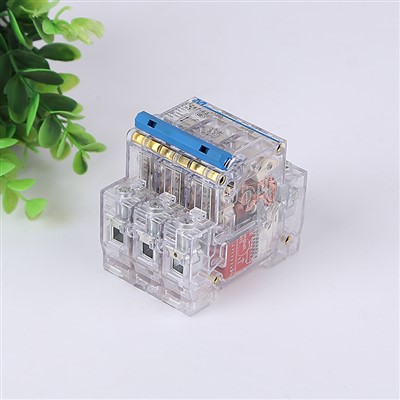
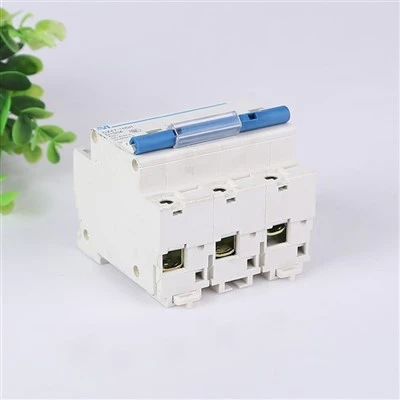
Miniature Circuit Breakers (MCBs) prevent these scenarios, offering precise and reliable protection for your electrical infrastructure. A miniature circuit breaker (MCB) is an automatic electrical switch that protects circuits from damage caused by overloads or short circuits.
Product advantages

Protection Against Overloads: MCBs automatically disconnect the circuit when current exceeds safe levels, preventing overheating, fires, or damage to electrical devices.
Rapid Response to Short Circuits: When a short circuit occurs, MCBs quickly trip the circuit, cutting off excessive current and protecting equipment from damage.
Safeguarding Sensitive Equipment: MCBs prevent fluctuations in current that could damage costly equipment, ensuring stable and safe power for machinery and devices.
Compliance with Regulations: MCBs help businesses meet local electrical codes and safety standards, ensuring compliance and reducing the risk of legal or insurance issues.
Cost-Effective Protection: MCBs are affordable, easy to install, and maintain. Their low cost offers significant savings by preventing costly repairs and equipment damage.
Improved System Reliability: MCBs contribute to the smooth functioning of electrical systems by preventing faults, reducing downtime, and enhancing overall operational efficiency.
Minimizing Human Risk: MCBs offer critical protection against electric shocks and fires, helping ensure the safety of workers and reducing the risk of workplace accidents.
Common types

Type B
These MCBs trip between 3 and 5 times the rated current. They are suitable for resistive loads, such as lighting circuits, domestic appliances, and general-purpose outlets.

Type C
These MCBs trip between 5 and 10 times the rated current. They are suitable for inductive loads, such as motors, transformers, and solenoids.

Type D
These MCBs trip between 10 and 20 times the rated current. They are suitable for highly inductive loads, such as welding machines, X-ray machines, and large motors.
Application
Residential Circuits
Type B MCBs are most commonly used in homes.
They protect appliances like lights, heaters, and refrigerators from overcurrent.
Commercial Applications
Type C MCBs are preferred in commercial environments.
These MCBs handle circuits with higher power requirements, such as those for lighting systems and HVAC units.
Industrial Equipment
Type D MCBs are ideal for protecting industrial machinery with high starting currents.
Common in factories and warehouses for equipment like conveyor belts and large motors.
Components
Toggle Switch
This manual lever allows an operator to turn the circuit on or off. It also provides a visual indication of the breaker's status: on, off, or tripped due to a fault.
01
Thermal Trip Unit
This unit provides overload protection. It consists of a bimetallic strip that heats and bends when a sustained overcurrent flows through it, tripping the breaker.
02
Magnetic Trip Unit
This unit protects against short circuits. It contains an electromagnet that instantly activates and trips the breaker when a sudden, high surge of current is detected.
03
Contacts
These are the points inside the MCB that make or break the circuit. When the breaker is on, the contacts are closed, allowing electricity to flow. During a trip, they open to interrupt the current.
04
Arc Chute
A series of metal plates that quickly cool and extinguish the electrical arc that forms between the contacts when the circuit is broken, preventing damage.
05
Installation Precautions
Secure DIN Rail Mounting
Make sure the breaker snaps firmly onto the DIN rail. A loose MCB will vibrate, which can lead to iffy connections and wear out the terminals over time.
Use the Right Wire
Always match the wire gauge to the breaker's amp rating and what the load demands, following NEC guidelines. Undersized wires are a classic cause of overheating, creating the very fire hazard the MCB is there to prevent.
Get the Torque Right
This is one of the most critical and easily overlooked steps. Use a calibrated torque screwdriver to tighten the terminal screws to the manufacturer's exact spec. Over-tightening can crack the terminal, but under-tightening is just as bad—it creates a high-resistance hot spot.

Other Services
Advanced Arc-Extinguishing Technology
Features an optimized arc chute design that rapidly interrupts fault currents in milliseconds, minimizing thermal and mechanical stress on downstream equipment.
Versatile Trip Unit Options
Available with high-precision electronic or reliable thermal-magnetic trip units. Adjustable current settings allow for precise matching to specific load profiles.
High Breaking Capacity, Compact Footprint
Delivers exceptional short-circuit breaking capacity (Icu/Ics) within a compact frame. This space-saving design optimizes panel layout and reduces overall enclosure costs.
Field-Installable Modular Accessories
Easily accommodates snap-on accessories—including shunt trips, undervoltage releases (UVR), auxiliary contacts, and alarm switches—to support complex control logic and remote monitoring.
Certifications





Package & Delivery
Package: Standard export package or Custom
Delivery: By air express, by sea

FAQ
As one of the leading miniature circuit breaker manufacturers and suppliers in China, we have world-leading production equipment and strong manufacturing capabilities. Please feel free to wholesale advanced miniature circuit breaker at competitive price from our factory.
Molded MCB, MCB for DC Circuits, miniature circuit breaker