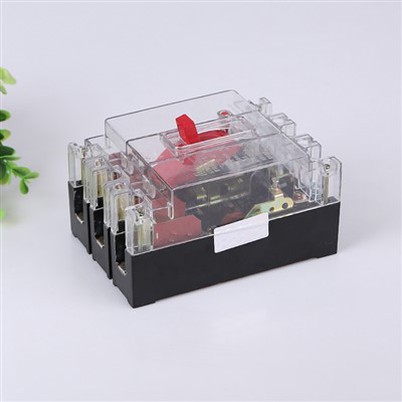

Definition and aliases of miniature residual current circuit breakers
Leave a message
A miniature residual current circuit breaker (MRCB) is a modular terminal distribution appliance that integrates overload, short-circuit, and residual current protection functions. Based on a standard miniature circuit breaker (MCB), it adds a residual current operated (RCD) module. When a leakage current occurs in a line or equipment, and the residual current reaches a set value (e.g., 30mA), it can quickly cut off the power supply, effectively preventing electric shock and electrical fires. This product is typically DIN rail mounted and is suitable for single-phase power distribution systems with AC 50Hz and a rated voltage of 230V and below. It is widely used in residential and commercial settings where high-level safety protection is required for terminal circuits.
A miniature residual current circuit breaker (often called a residual current switch or RCBO) is an electrical protection device that integrates overload protection, short-circuit protection (MCB function), and residual current protection (RCD function). It is mainly used in low-voltage power distribution systems with AC 50Hz, single-phase 230V or three-phase 400V and below.
Air circuit breakers (miniature circuit breakers, MCBs) provide only overload and short-circuit protection; residual current devices (RCDs) provide only residual current protection; while miniature residual current circuit breakers (RCBOs) combine the functions of both, making them a composite protective device.
Common alternative names include residual current switch, residual current operated circuit breaker (RCBO), and residual current protection switch.