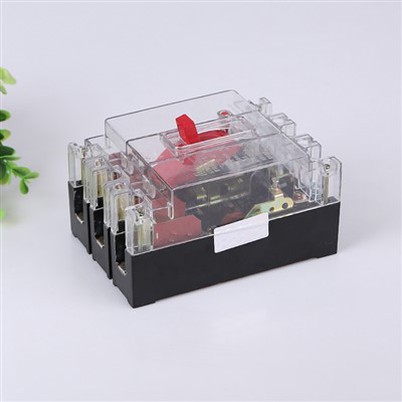

Classification requirements for residual current circuit breakers
Leave a message
A residual current device (RCD), also known as a residual current circuit breaker or residual current device, is primarily used to protect equipment from electrical leakage faults and to protect individuals from potentially fatal electric shocks. It provides overload and short-circuit protection and can be used to protect circuits or motors from overload and short circuits. It can also be used for infrequent switching and starting of circuits under normal conditions.
RCDs are generally classified into Type C and Type D. Type C is typically used in household applications, while Type D is generally used in industrial applications.
The following are the requirements for the leakage current values of electrical circuits and equipment, as well as the coordination of leakage current characteristics and time characteristics for graded installation:
1. When used for a single electrical device, the operating current should be no less than 4 times the measured leakage current during normal operation;
2. The operating current of the residual current device (RCD) for a distribution line should be no less than 25 times the measured leakage current during normal operation, and should also meet the requirement of 4 times the normal operating leakage current of the electrical device with the largest leakage current;
3. When used for the protection of the entire network, the operating current should be no less than 2 times the measured leakage current;
4. The rated operating current of the RCD should have a certain margin to accommodate increased current leakage caused by factors such as decreased circuit insulation resistance over time, increased electrical equipment, and seasonal changes.